

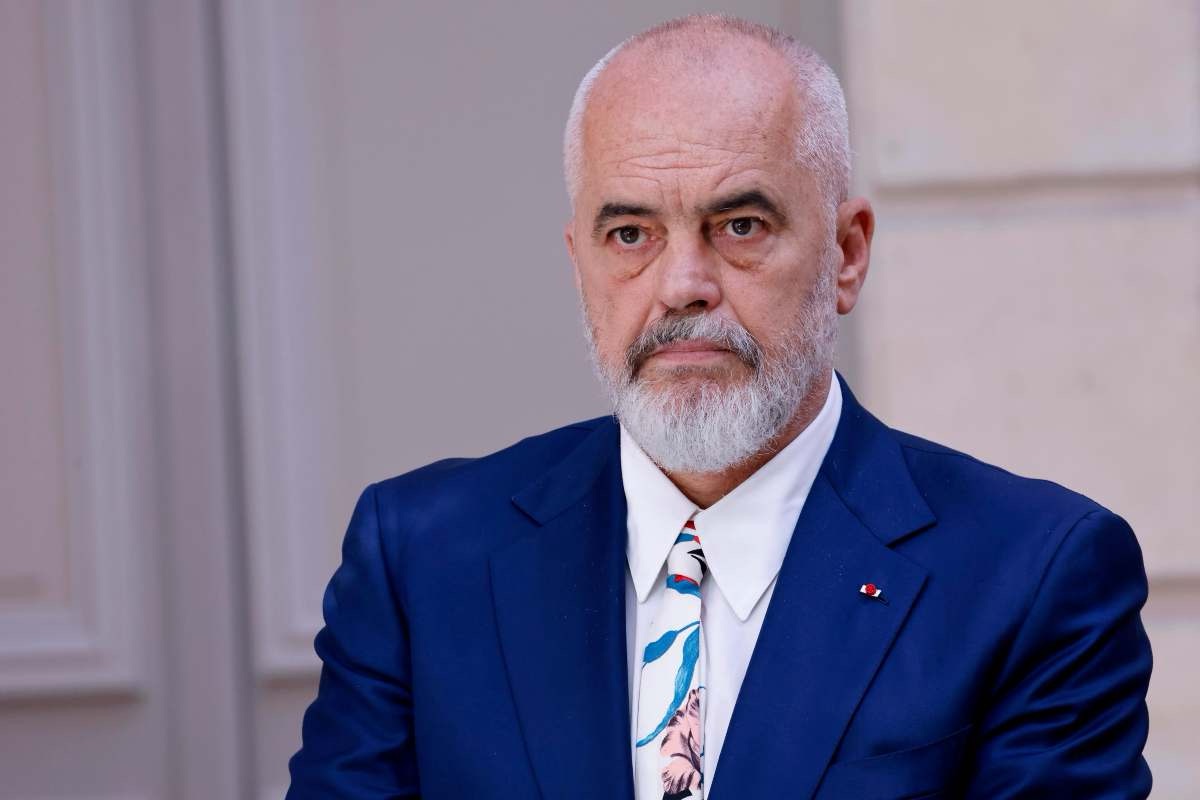
Prime Minister Edi Rama wrote on Facebook:
“I do not know Yll Limani. I do not listen to his music. But the online violence directed at him, the calls to boycott his concert, and the threats made against him following last night’s successful performance represent, in my view, the most repulsive expression of a phenomenon that has accompanied the boulevard protest: a form of degradation of public life on social media, now elevated to a new level of group aggression. This should not be justified, relativized, or accepted through silence—it must be confronted with the power of words.
The fact is that the international social media hysteria is gradually fading. It has nothing to do with the nature of Albania, with Zvërnec or the flamingos of Narta, but is fueled by ideological opposition of a certain kind, where opposition to the American President is undoubtedly the main driving force. Otherwise, I highly doubt that a single international activist would concern themselves with a tourism development project in Albania. And naturally, this hysteria will continue to decline because Albania is far too small a stage for the global anti-Trump movement.
At the same time, however, a wave of verbal violence is growing every day—filled with pressure, vulgarity, and threats against anyone who does not align with the boulevard protesters. From calls telling people to ‘get up from their cafés’ because supposedly the nation is calling them, to demands to block roads so that anyone with other responsibilities is forced to participate in this so-called patriotic cause, to an intimidating online hysteria carried out in the name of patriotism that has nothing to do with the elegance and peace of the flamingos.
History has shown us repeatedly that this is precisely how many movements have emerged before eventually turning into organized symbols of political and social intolerance. Not by persuading with logical arguments, but by imposing themselves through pseudo-moral pressure. Not by respecting the right of others to think differently, but by branding anyone who disagrees as a traitor, a sellout, an enemy of the people, or an accomplice to evil.
The belief that only one group possesses the absolute truth fuels contempt for the majority who do not join them. It promotes the dangerous idea that those who do not protest should be shamed, isolated, obstructed, or even physically attacked until they are forced to choose a side. In such circumstances, democracy does not breathe more freely—it begins to lose its pulse.
No extremist movement begins by seizing power through force. It begins by claiming that only it represents the nation, only it hears the voice of the people, and only it has the moral right to decide who is a patriot and who is not.
In Italy, Mussolini’s Blackshirts first appeared by intimidating opponents in the streets before taking over institutions. In Germany, Nazi militants created an atmosphere of fear and social pressure long before they gained power. In Greece, Golden Dawn rose through the same exclusionary, aggressive, and nationalist mentality, spreading division, hatred, and pressure against anyone who refused to submit to its pseudo-patriotic ideology.
‘We are the real people, and whoever is not with us is an enemy of the people’—this is the formula that often precedes serious political and social consequences when embraced by groups driven more by resentment than reason.
This is not to say that everyone protesting today should be labeled a neo-fascist—absolutely not. Many people engaging in online aggression may not even realize what they are doing. But those who attack online anyone who does not support the protest—who are undoubtedly the majority of Albanians, even beyond those who support the Socialist Party government—not only fail to improve Albania, but strike at one of the country’s strongest characteristics: its instinctive rejection of both national-socialist and neo-communist ideologies.
The issue is not whether someone protests or not. Protest is a democratic right and must always be respected. Respect for protest has been one of the democratic achievements of this period under the Socialist Party government. However, freedom of speech is even more important than the content of speech itself. And when a protest begins suggesting that anyone who does not participate is somehow less of a citizen, less of a patriot, or less Albanian, then democracy is threatened not from above, but from below.
History has taught us many times that when dialogue is replaced by condemnation, arguments by insults, and persuasion by intimidation—when crowds begin deciding who has the right to speak and who does not—the result is never freedom, but its end.
This mentality only harms Albania. It shrinks the economy, drives away investment, and clouds the future.
But this people have not come this far only to turn back. They are determined to climb higher than ever before, without fear of heights they have never reached, and with the conviction that the obstacles that held them back for centuries will not stop them anymore. They are determined to succeed this time, even if all the devils in the world unite against them, as they have done more than once throughout Albania’s painful history.”

