

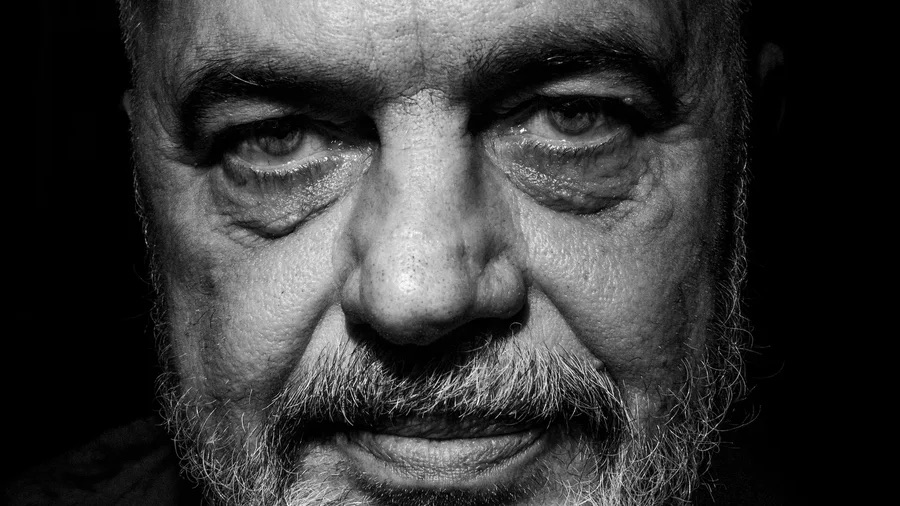
Repeated statements by Prime Minister Edi Rama, in which he has acknowledged that the pressure created by ongoing protests and strong public reactions has made him consider even the possibility of stepping down, have sparked political debate across the country. Rama has suggested that the public dissatisfaction has placed him under unusual political and personal pressure.
“These are extraordinary days that, for the first time, have made me think about bowing deeply to you for the great honor you have given me and apologizing before returning to my village and leaving you in the hands of those you choose yourselves to protect Albania from outsiders. But I have chosen to do what I have always done: lead you toward the Albania we aspire to,” Rama said.
Majority Government Under Pressure
The pressure on the ruling majority is growing, as yesterday marked the 18th consecutive day of citizen protests against the government. What began as opposition to the resort project in Zvërnec and Sazan has evolved into a much broader movement, with demands extending beyond environmental concerns and directly addressing governance, emigration, corruption, and the country’s future.
For more than two weeks, thousands of citizens have filled Tirana’s main boulevard, Dëshmorët e Kombit, and the square in front of the Prime Minister’s Office every evening. Among Albanian flags, banners, and anti-government chants, the main demand remains the resignation of Prime Minister Edi Rama and the Socialist majority.
The movement has gradually taken on the characteristics of a grassroots civic protest, with participation led not by political parties but by ordinary citizens, families, young people, professionals, and emigrants returning home for the holidays.
Each evening, after speeches conclude outside the Prime Minister’s Office, protesters begin a march that has become part of the protest’s daily ritual. Tirana’s main streets are filled with long columns of people moving through the city with chants and patriotic songs.
However, Sunday’s protest marked a new phase. For the first time since the movement began, demonstrators completely blocked the Tirana–Durrës highway and the road connecting the capital to Tirana International Airport. After more than two hours of speeches, the crowd marched toward the Kashar overpass, creating kilometers of traffic on Albania’s most important roadway. Protesters then continued toward the airport road, paralyzing traffic for several hours at one of the country’s most strategic transportation hubs.
At the same time, while thousands gathered outside the Prime Minister’s Office, Socialist Party MP Marjana Koçeku, known as “Neomalësorja,” announced her departure from the Socialist parliamentary group. Through a public statement on social media, she declared that she would continue her mandate as an independent MP, arguing that her limits are defined by personal values rather than party affiliation.
One of the most distinctive elements of the movement remains its banners. While the early days focused on protecting Zvërnec, today’s messages reflect a much wider range of concerns. Mass emigration, corruption, the rising cost of living, the lack of opportunities for young people, and criticism of the political class have become central themes of the protests.
Another significant aspect is the Albanian diaspora. Albanians in London, Vienna, Munich, and various cities across the United States and Canada have organized solidarity gatherings in support of protesters in Albania. Hundreds carrying the Albanian flag have sent messages of support to those demonstrating in Tirana.
The slogan “Rama, resign!” has become the common refrain of protests both inside and outside the country.
In this context, the confrontation between street protests and institutional power is becoming the defining test of Albania’s political climate. While one side demands immediate political change, the other faces growing public and political pressure. The coming days are expected to determine whether this confrontation remains at the level of ongoing demonstrations or develops into a new phase of political change.
Exposed Before the World
For years, Edi Rama was viewed internationally as Albania’s charismatic prime minister—the leader who attended international summits wearing white sneakers, made jokes, and exchanged warm greetings with European leaders.
In the eyes of international media, he appeared as the “playful boy” among serious world leaders, becoming a favorite figure for journalists eager to capture a memorable quote or unusual moment that would generate headlines.
At conferences, Rama spoke about Albania’s development, the country’s desire to join the European Union, and how his government’s reforms had transformed Albania and prepared it for membership in the European family. Albania was portrayed as a Balkan success story, with Rama as its architect.
However, those media outlets that presented him as the “perfect” prime minister did not see what was actually happening inside Albania. They did not witness the daily realities faced by ordinary citizens. They did not see how coastlines, mountains, and public assets were allegedly handed over to a small group of oligarchs, nor how poverty pushed hundreds of thousands of Albanians to leave the country.
Nor did they see how Rama and his parliamentary majority voted to protect Belinda Balluku, who has faced accusations involving hundreds of millions of euros of taxpayer funds.
And to remove this “mask,” it would take the voices of Albanians themselves.
The protests, which have gathered tens of thousands of Albanians in Tirana and beyond, became the catalyst that allowed international media to better understand what is truly happening in the country. They sent a powerful message to the world, showing that behind the narrative of success lies a different reality—a country still struggling with corruption, inequality, and the capture of institutions.
For the first time, many journalists from prestigious international media outlets were no longer interested in white sneakers or witty remarks. Their questions focused on Albania’s economy, controversies surrounding strategic investments, and the intensive construction of protected areas.
What propaganda had allegedly attempted to conceal for years was revealed to the world by Albanians themselves—people determined to take their future into their own hands.
The protest movement, which yesterday entered its 18th day, has shown the world that Albania is not necessarily the image presented in official statements, but a country blessed with extraordinary natural wealth that many believe has been mismanaged by its political class.
This protest, which supporters say will continue until its objective of Rama’s resignation is achieved, has already accomplished one goal: it has drawn international attention to the realities that many Albanians believe their country faces today.

