

There are moments in life when you believe you’ve reached the absolute bottom. You think you understand what true heartbreak feels like. You imagine that nothing could possibly hurt more than the initial blow.
But sometimes, life has a way of showing you that the floor can drop out from beneath your feet twice.
I learned this lesson when I was thirty years old, standing in my childhood backyard, watching my father exchange wedding vows with my mother’s own sister. The ceremony took place just eight days after we had buried my mom.
Eight days.
That’s barely enough time for the funeral flowers to wilt. It’s not even long enough for the sympathy cards to stop arriving in the mail. Most people are still deciding what casserole to bring over when eight days have passed.
But apparently, it was enough time for my father to move on completely.
My name is Tessa, and before that devastating week, I thought I understood what grief looked like. I thought I knew my family. I thought I understood the people who raised me and the bonds that held us together through good times and bad.
I was wrong about all of it.
The Day Everything Changed
My mother’s name was Laura. She was the kind of woman who remembered everyone’s birthday, who kept a garden that neighbors would slow down to admire, and who could make you feel like the most important person in the world when she listened to your problems.
She wasn’t perfect, but she was mine. She was ours.
The accident happened on a Tuesday afternoon. Mom had gone out to pick up a prescription from the pharmacy, something routine she’d done a hundred times before. The weather was clear. Traffic was normal. There was no reason to worry.
But sometimes tragedy doesn’t need a reason.
A driver ran a red light at the intersection near the shopping center. The police told us she probably didn’t see it coming. They said it would have been instant, that she wouldn’t have suffered.
I’m not sure if that’s supposed to make it better. It doesn’t.
When the officer appeared at our door that evening, hat in hand and eyes full of practiced sympathy, I knew before he spoke. Something about the way he stood there, the careful gentleness in his posture, told me that life as I knew it had just ended.
My father made a sound I’d never heard before. It came from somewhere deep inside him, raw and broken. It was the sound of a man’s world collapsing.
Or at least, that’s what I thought it was.
The Funeral and Its Aftermath
The days following Mom’s death moved like a strange dream. Time felt thick and slow, like trying to walk through water. People came and went from our house, bringing food we couldn’t eat and offering words that couldn’t possibly help.
My father barely spoke. He sat in his recliner, staring at nothing, while well-meaning neighbors filled our refrigerator with enough lasagna to feed an army.
And through it all, my Aunt Corrine was there.
Corrine was my mother’s younger sister by three years. They’d been close growing up, or so I’d always been told. Family photos showed them smiling together at holidays, arms around each other’s shoulders, looking like the kind of sisters who shared secrets and finished each other’s sentences.
At the funeral, Corrine wept louder than anyone. She clutched my arm during the service, her sobs echoing through the church. She threw herself dramatically across the casket during the viewing, crying out Mom’s name like something from a movie.
People whispered about how hard it must be for her, losing a sister. How devoted she was to our family in this difficult time.
I appreciated her presence then. I thought she was grieving just as deeply as we were. I thought her tears were real.
Looking back now, I wonder how I missed the signs.
Small Details That Didn’t Add Up
The reception after the funeral was held at our house. Dozens of people crowded into the living room and spilled out onto the back patio, speaking in hushed tones and sharing memories of my mother.
I was in the kitchen, mechanically arranging cookies on a platter someone had brought, when I noticed Corrine’s hands.
Her nails were perfect. Glossy pink polish, professionally done, without a single chip or smudge.
It seemed like an odd detail to focus on during a funeral reception, but something about it caught my attention. The rest of us looked like we’d been through a war. My father’s shirt was wrinkled. I had dark circles under my eyes that no amount of concealer could hide. Even the most put-together guests showed signs of the emotional toll.
But Corrine’s manicure was flawless.
When she caught me staring, she held up her hands with a small, almost embarrassed smile.
“I chipped one earlier this week from hugging so many people at the house,” she explained. “I had to get them redone. I hope that’s okay. I know it seems silly, but having my hands look nice makes me feel a little more pulled together when everything else feels like it’s falling apart.”
It made sense at the time. People cope with grief in different ways. Some people clean obsessively. Others throw themselves into work. Why shouldn’t someone get their nails done if it helped them feel more in control?
I nodded and told her I understood. But somewhere in the back of my mind, a small voice whispered that something felt off.
I ignored it. Grief has a way of making you question everything, of making ordinary things seem suspicious. I told myself I was just looking for something, anything, to focus on besides the gaping hole my mother’s absence had left.
The Announcement Nobody Expected
Three days after the funeral, my father called me into the living room. His face was serious, but there was something else there too. Something I couldn’t quite identify.
Corrine sat beside him on the couch, her hand resting on his knee.
“Tessa, sweetheart, sit down,” Dad said. “We need to talk to you about something.”
The formality of it sent a chill down my spine. In our family, “we need to talk” had always preceded serious news. Medical diagnoses. Job losses. Problems that required everyone to be strong together.
I sat in the armchair across from them and waited.
“Your aunt and I have been talking,” Dad began, not quite meeting my eyes. “About the future. About how to move forward from here.”
Corrine squeezed his hand encouragingly.
“These past few days have been the hardest of my life,” he continued. “Losing Laura… I didn’t think I could survive it. But Corrine has been here, helping us through this nightmare. She understands what I’m going through because she’s lost Laura too.”
I nodded slowly, not sure where this was going but feeling increasingly uneasy.
“Life is short, Tessa. Your mother’s death taught us that. And when you lose someone, you realize how important it is not to waste time. Not to put off happiness or wait for the perfect moment that might never come.”
Corrine was smiling now, a soft, gentle expression that looked almost tender.
“We wanted to tell you first, before anyone else,” Dad said. “Corrine and I are getting married. This Saturday.”
The room tilted.
Saturday. That was five days away. Five days after my mother’s funeral. Eight days total since she’d died.
“I know it seems fast,” Corrine jumped in, her voice syrupy with false understanding. “But when you’ve been through something this traumatic, you learn to grab onto whatever light you can find. Your father needs support right now. He needs someone who understands him.”
“And you’re okay with this?” I heard myself ask, though my voice sounded like it was coming from very far away. “Both of you think this is appropriate?”
Dad’s expression hardened slightly. “I need you to support this decision, Tessa. I know you’re grieving too, but I can’t be alone right now. I won’t survive it.”
“It’s been eight days,” I said quietly. “Mom’s been gone for eight days.”
“Which is exactly why we need to do this now,” Corrine said firmly. “Before the grief becomes unbearable. Before your father sinks into a depression he might not recover from. This is about healing, Tessa. About moving forward together.”
But nothing about this felt like healing.
The Wedding Nobody Asked For
Saturday arrived with cruel efficiency. I woke up hoping the whole conversation had been some kind of grief-induced hallucination, but the sound of workers setting up chairs in the backyard confirmed it was real.
White folding chairs arranged in neat rows. A small arch decorated with flowers that definitely weren’t the kind my mother would have chosen. A table being set up for a cake I hadn’t seen ordered.
I stood at the kitchen window, coffee growing cold in my hands, watching the transformation of our backyard into someone else’s wedding venue.
That’s when I saw her.
Corrine, directing two workers toward my mother’s tulip bed.
Those tulips had been my mother’s pride and joy. She’d planted them five years ago, carefully selecting varieties that would bloom in sequence throughout the spring. She’d marked their progress in a little garden journal, noting which colors came up first and which ones needed more shade.
Every spring, our backyard became a riot of red, yellow, pink, and purple blooms. Neighbors would knock on the door just to ask what varieties she’d planted.
And now Corrine was having them ripped out.
I ran outside, still in my pajamas, as one of the workers drove a shovel into the soil.
“Stop!” I called out. “What are you doing?”
Corrine turned, looking mildly annoyed at the interruption.
“Oh, Tessa. I didn’t know you were up. We’re just clearing this area for the ceremony. These flowers would ruin the aesthetic in the photos.”
“Those are Mom’s tulips,” I said, my voice shaking. “She planted those herself. You can’t just tear them out.”
Corrine’s expression shifted to something that might have been sympathy if it reached her eyes.
“Sweetie, I know this is hard. But your mother loved projects, didn’t she? She was always making things complicated, always fussing over little details.” She gestured vaguely at the garden. “We’re simplifying things. Making this space beautiful in a different way. Your mom would understand that sometimes we need to make changes.”
“She’s been gone for eight days,” I repeated, feeling like a broken record. “And you’re erasing her.”
“We’re not erasing anyone,” Corrine said, her voice taking on a sharp edge beneath the sweetness. “We’re moving forward. Your father needs this, Tessa. Can’t you see that? Can’t you put his needs first for once?”
Before I could respond, Dad appeared on the patio.
“What’s going on?” he asked, looking between us.
“Tessa is upset about the tulips,” Corrine explained, her tone suggesting I was being unreasonable. “I was just trying to help her understand why we need to make some changes.”
Dad looked at me with an expression I didn’t recognize. Tired. Distant. Like he was already somewhere else.
“Not today, Tessa,” he said quietly. “Please. Just… not today.”
And that’s when I realized the truth with brutal clarity.
He’d already chosen. Between his daughter’s grief and his new wife’s wants, he’d made his choice.
It wasn’t me.
The Guest Who Changed Everything
The ceremony was scheduled for two in the afternoon. Guests started arriving around one-thirty, most of them looking confused and uncomfortable. They’d been at my mother’s funeral just over a week ago. Now they were being asked to celebrate her husband’s new marriage.
To her sister.
Some people whispered to each other in the parking area. I saw several guests exchange glances that clearly said they thought this was wildly inappropriate but didn’t know what to do about it. Southern manners dictated they smile and bring gifts and keep their judgments to themselves.
But I could see it in their eyes. They knew this was wrong.
I’d gotten dressed in a simple black dress, the same one I’d worn to the funeral. It felt appropriate somehow. Corrine had suggested I wear something more festive, but I’d ignored her.
An hour before the ceremony, she found me in my old bedroom, sitting on the edge of the bed and staring at nothing.
“Tessa,” she said brightly, sweeping into the room in her ivory cocktail dress. Not quite white, but close enough to make a statement. “You should come downstairs and mingle with the guests. People are asking about you.”
I didn’t move.
She sat down beside me, and that’s when I saw it clearly. The ring on her left hand.
It was beautiful. A vintage-style setting with a center diamond surrounded by smaller stones, the kind of ring that takes time to design and order. The kind you don’t just pick up at a jewelry store on a whim.
“Do you like it?” she asked, noticing my stare. She held her hand out, letting the light catch the facets of the diamond. “Your father has such wonderful taste. He picked it out himself, you know. Said he wanted something that represented a real beginning.”
Something about those words stuck in my mind. A real beginning.
“When did he give it to you?” I asked, surprised by how steady my voice sounded.
“A few days ago,” she said vaguely. “After we made the decision to move forward together. He said he’d been saving it for the right moment.”
The right moment. Less than two weeks after his wife died.
I must have made some sound, because Corrine’s expression shifted slightly.
“You should be grateful, you know,” she said, her voice losing some of its sweetness. “Your father won’t be alone now. He’ll have someone to take care of him, to help him through his grief. That’s what your mother would have wanted. For him to be happy.”
“My mother’s been dead for eight days,” I said, finally meeting her eyes. “Do you really think this is what she would have wanted?”
“Your mother is gone,” Corrine said bluntly. “And the living have to keep living. Your father needs someone, Tessa. He’s not strong enough to be alone.”
“So you’re doing this out of the goodness of your heart?”
Her smile turned cold. “I’m doing this because I love him. Because we deserve happiness after everything we’ve been through.”
We.
As if she’d lost anything close to what I had.
I stood up, needing to get away from her before I said something that couldn’t be taken back. Before I completely lost control.
“I need some air,” I muttered, pushing past her and heading for the back door.
I ended up beside the side gate, behind a row of hedges where I couldn’t be seen from the main gathering. My hands were shaking. My stomach was churning. The sound of champagne glasses clinking and polite laughter drifted over from the patio, and it felt surreal.
Wrong.
Everything about this was wrong.
That’s when I heard footsteps behind me.
“Tessa?”
I turned to find Mason standing there. Corrine’s son. He was twenty-seven, quiet and serious, and we’d barely spoken over the years beyond polite holiday greetings.
“Are you okay?” he asked, though his expression suggested he already knew the answer.
“I’m fine,” I lied automatically.
He glanced back toward the house, then stepped closer, lowering his voice.
“Can we talk? Somewhere private?”
Something in his tone made me pay attention. He looked nervous. Almost scared.
“Okay,” I said slowly.
He led me further back, behind the old storage shed where no one would see us. Where no one would interrupt whatever he needed to say.
And then he spoke the words that shattered everything I thought I knew.
“Tessa,” he said, his voice shaking slightly. “That ring she’s wearing? The one she says your dad just gave her?”
I nodded, my heart starting to pound.
“I saw it before. Last Christmas.”
The world stopped.
“What?” I whispered.
Mason pulled out his phone with trembling hands. “She showed it to me. Told me your dad had picked it out. That it was special. I took a picture because… because it seemed weird at the time, but I didn’t know why.”
He turned the screen toward me.
There was the ring. The exact same ring. In a velvet box, photographed in what looked like Corrine’s bedroom.
The photo was dated December 23rd of the previous year.
Last Christmas.
When my mother was still alive.
When my mother was still baking cookies in the kitchen, still wrapping presents, still making plans for the new year.
When my parents were still married.
When everything was still normal.
“There’s more,” Mason said quietly…
Mason’s hands shook as he scrolled through his phone, and I felt my entire body go cold despite the warm afternoon sun beating down on us behind that shed.
“I didn’t understand what it meant at the time,” he said quietly, his eyes not meeting mine. “Mom was showing me all these things she’d gotten for Christmas, and she pulled out this box. She was so excited about it. She said Dad—your dad—had picked it out specially. That it represented their real beginning.”
Those words again. A real beginning.
“I thought maybe she meant it was from her boyfriend or something,” Mason continued. “Mom’s had a lot of boyfriends over the years. I didn’t think much about it until today, when I saw her wearing it at the ceremony. The exact same ring.”
He handed me his phone so I could look at the photo more closely. There it was, unmistakable in its vintage setting and unique design. The same ring currently sitting on Corrine’s finger as she greeted wedding guests and accepted congratulations.
“Did she say anything else about it?” I asked, my voice barely above a whisper.
Mason nodded slowly. “She said something about finally being able to live her real life. About not having to pretend anymore. I asked her what she meant, but she just laughed and changed the subject. You know how Mom is. She’s always been dramatic.”
Dramatic didn’t begin to cover what was happening here.
My mind raced backward through the previous year, trying to remember family gatherings, holiday celebrations, any hint that something had been going on between my father and my aunt. Had there been knowing glances I’d missed? Suspicious absences explained away too easily?
“Is there anything else?” I heard myself ask. “Any other photos? Messages? Anything that might show how long this has been happening?”
Mason looked miserable. “I’ve been going through my phone all morning, trying to figure out if I should tell you. I kept thinking maybe I was making something out of nothing, but…”
“But what?”
“Thanksgiving,” he said finally. “Do you remember Thanksgiving?”
I did. We’d hosted it at our house like always. Mom had spent days preparing the turkey, making sides from scratch, setting the table with her good china. Corrine had arrived with Mason and stayed through the weekend.
“Mom went out for a walk one evening,” Mason said. “Said she needed air after all the food. She was gone for over an hour. When she came back, her makeup was redone and she was wearing different perfume.”
“That doesn’t necessarily mean—”
“Your dad went out for a walk that same evening,” Mason interrupted gently. “About ten minutes after Mom left. Said he needed to clear his head.”
The implication hung in the air between us, heavy and suffocating.
“I didn’t put it together then,” Mason said. “But I remember because I thought it was weird that they both happened to need walks at the same time. And when they came back, they both seemed… I don’t know. Different. Energized.”
I leaned against the shed, needing something solid to hold me up. My mother had been in the kitchen that evening, I remembered now. She’d been doing dishes and humming to herself, happy in her own home, completely unaware that her husband and her sister were…
I couldn’t finish the thought.
Following the Paper Trail
“Do you know what jeweler he used?” I asked suddenly, an idea forming. “Was it local?”
Mason thought for a moment. “I think Mom mentioned the name once. Ridge-something? Ridgeway, maybe? It’s that fancy place downtown, across from the courthouse.”
Ridgeway Jewelers. I knew it. An upscale store that had been in our town for three generations, known for custom work and high-end pieces.
“Did she keep the box?” I pressed.
“I don’t know. Maybe? She keeps a lot of jewelry boxes in her dresser.”
An idea was taking shape, dangerous and necessary.
“I need to get into the house,” I said. “Into her room.”
Mason’s eyes widened. “Tessa, I don’t think—”
“I need proof, Mason. Real proof. If I’m going to stand up and say something, I need more than a photo and a story about a walk. I need something concrete.”
He hesitated, clearly torn between loyalty to his mother and doing what was right.
“Please,” I added. “If this is what it looks like, don’t you think people deserve to know the truth? Don’t you think my mother deserved better than this?”
That seemed to decide him. Mason pulled a key from his pocket.
“She’s downstairs playing hostess,” he said. “Everyone’s focused on the ceremony area. We’ve probably got twenty minutes, maybe thirty if we’re lucky.”
We moved quickly but carefully through the back door and up the stairs to the guest room where Corrine had been staying. It felt strange, almost like trespassing in my own home, but we’d crossed into territory where normal rules no longer applied.
Corrine’s suitcase lay open on the bed, spilling expensive clothes and cosmetics across the comforter. Her dresser drawers were partially open, revealing more personal items than I wanted to see.
“Top drawer, right side,” Mason said, pointing. “That’s where she usually keeps jewelry boxes.”
I pulled the drawer open fully and found myself looking at a collection of velvet boxes in various sizes and colors. Some were clearly from department stores. Others bore the names of local jewelers.
And there, pushed toward the back, was a cream-colored box with gold lettering. Ridgeway Jewelers.
My hands trembled as I lifted it out. It was empty now—the ring was on Corrine’s finger downstairs—but inside the lid was exactly what I’d hoped to find.
A small card, tucked into the satin lining.
I pulled it out carefully and read the handwritten message in my father’s distinctive scrawl:
“For our real beginning. All my love, forever yours.”
It was dated December 18th of the previous year.
Seven days before Christmas. Eleven months before my mother died.
“Oh God,” Mason breathed beside me.
I took photos of everything. The box. The card. The date. Mason stood watch by the door, his face pale.
“There’s more,” he said suddenly, pointing to a small notebook tucked beside the jewelry boxes. “That’s Mom’s planner. She writes everything down.”
I picked it up, and it fell open to a page from the previous spring. There, in Corrine’s looping handwriting, were entries that made my blood run cold.
“Lunch with D. – Can’t wait to see him.”
“D called – says he’s telling her this weekend.”
“Weekend trip canceled – she suspects something.”
D. For Dad.
And “she” had to mean my mother.
I photographed those pages too, my hands shaking so badly I had to take several attempts to get clear images.
“We need to go,” Mason urged. “They’ll start looking for us soon.”
We slipped out of the room and back downstairs, emerging into the backyard just as guests were beginning to take their seats for the ceremony.
The Jeweler’s Receipt
I couldn’t stay. Couldn’t sit through a ceremony knowing what I knew, holding proof that this marriage was built on betrayal that had been happening for months, maybe longer.
“I have to go,” I told Mason. “I need to—I don’t know what I need to do, but I can’t be here right now.”
“What are you going to do?” he asked.
“I don’t know yet. But thank you. For telling me. For helping me find the truth.”
He nodded, looking as shaken as I felt. “I’m sorry, Tessa. I’m sorry my mom did this to you. To your family.”
I left through the side gate, ignoring the curious looks from guests who saw me heading to my car. Let them wonder. In about an hour, they’d have much more to wonder about.
I drove straight to Ridgeway Jewelers, hoping desperately that they’d be open on a Saturday afternoon. The universe owed me at least this one small favor.
The bell above the door chimed as I entered. An older gentleman looked up from behind the counter with a professional smile.
“Good afternoon. How can I help you today?”
“I need information about a purchase,” I said, pulling out my phone to show him the photo of the ring box. “This ring was bought here. I need to see the receipt.”
His smile faltered slightly. “I’m afraid we can’t just give out information about purchases. Customer privacy, you understand.”
“The customer was my father,” I said, hearing the desperation creep into my voice. “And the ring was for a woman who isn’t my mother. Who was still alive when he bought it. Please. I just need proof of when it was purchased.”
Something in my expression must have convinced him. He sighed and turned to his computer.
“What’s the name on the account?”
“Robert Brennan,” I said. My father’s name felt strange in my mouth now, like I was talking about a stranger.
The jeweler typed for a moment, then pulled up a file. His expression shifted as he read whatever was on the screen.
“Miss, I really shouldn’t—”
“Please,” I interrupted. “My mother just died. Eight days ago. And today my father is marrying her sister. I need to know when this started. I need to understand what happened to my family.”
He was quiet for a long moment, studying my face. Then he turned the computer screen slightly so I could see it.
Purchase order dated December 18th, as the card had said. But there was more.
Notes in the file indicated this had been a custom design, requiring multiple consultations beginning in October. My father had come in four separate times to discuss the design, approve the setting, select the diamond.
Four visits over two months while my mother was alive and unsuspecting.
“There’s a note here from our designer,” the jeweler said softly. “Your father specifically requested vintage styling. He said it needed to be… let me read this exactly… ‘worthy of a woman who’d waited long enough.’”
Waited long enough.
How long had they been planning this? How long had they been together behind my mother’s back?
“Can I have a copy of the receipt?” I asked, my voice surprisingly steady.
The jeweler hesitated, then nodded. “I’ll print you one. And Miss? I’m very sorry for your loss. What they’re doing… it’s not right.”
He handed me the printed receipt, and I folded it carefully into my purse next to my phone with all its incriminating photos.
The Decision
I sat in my car outside the jewelry store for a long time, staring at the evidence spread across my passenger seat. Photos of journal entries. Photos of the ring box and card. A receipt proving deliberate planning and deception.
In my pocket, my phone buzzed with texts.
Dad: “Where are you? Ceremony starting soon.”
Corrine: “Tessa, people are asking for you. This is embarrassing.”
Another from Mason: “Are you okay?”
I wasn’t okay. I was the furthest thing from okay.
But I was armed with truth now. The question was what to do with it.
I could stay away. I could let them have their ceremony, their happy moment, their fresh start built on my mother’s grave. I could be the bigger person, the gracious daughter who stepped aside and let her grieving father find comfort wherever he could.
That would be the easy choice. The peaceful choice.
Or I could go back. I could stand up in front of everyone and show them exactly what kind of people were exchanging vows today. I could make sure that my mother’s memory wasn’t quietly erased and replaced with a prettier story about love blooming from shared grief.
I thought about my mother’s tulips, ripped from the ground like they’d never mattered. I thought about her recipes, her garden journal, all the small pieces of herself she’d left behind, being systematically erased by a woman wearing a ring my father had bought while his wife was still alive.
And I started the car.
The Toast Nobody Expected
I pulled back into the driveway just as the ceremony was beginning. Through the rows of seated guests, I could see Corrine in her ivory dress and my father in his dark suit, standing beneath the flower-covered arch.
The officiant was speaking about love and new beginnings and finding light in dark times.
I wanted to scream.
Instead, I slipped in quietly through the back gate and found a place to stand behind the last row of chairs. A few people noticed me and gave small, sympathetic smiles. Poor Tessa, their expressions said. So brave to be here supporting her father.
If they only knew.
The ceremony was brief. Dad and Corrine exchanged rings—hers already on her finger, his brand new. They promised to love and cherish each other, and I wondered if those words meant anything when they’d already proven themselves capable of such profound betrayal.
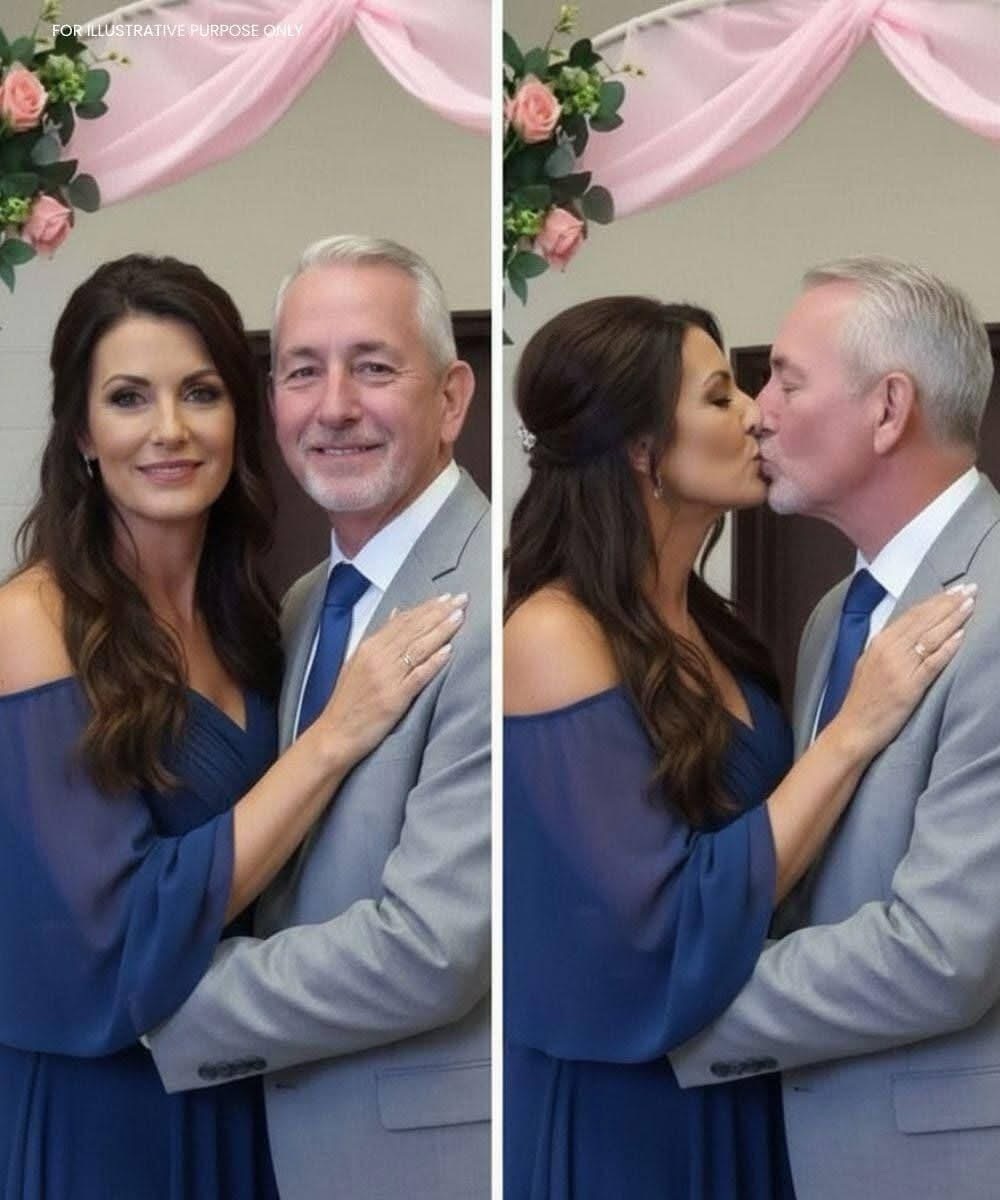
“I now pronounce you husband and wife,” the officiant announced, and Corrine kissed my father with an enthusiasm that made several guests look away uncomfortably.
Applause rippled through the crowd, polite but restrained. Nobody here thought this was appropriate, but they were all too well-mannered to say so out loud.
A table had been set up with champagne flutes, and servers began distributing them to guests as everyone stood and milled about, making awkward small talk.
That’s when Corrine spotted me.
She made her way over with Dad in tow, both of them wearing expressions of relief.
“Tessa!” she exclaimed. “You came back. I’m so glad. We were worried about you.”
“I needed some air,” I said neutrally.
“Well, you’re here now,” Dad said, pulling me into a hug that felt wrong. “That’s what matters. This is a happy day. A new beginning for all of us.”
“Actually,” a voice said behind them, “the bride’s daughter wanted to propose a toast.”
I turned to see a server holding out a champagne flute to me with a knowing look. Not one of Corrine’s hired people—this was Mrs. Chen from down the street, who’d been friends with my mother for twenty years.
“Oh, that’s not necessary—” Corrine started.
But Mrs. Chen was already tapping a fork against her glass, drawing everyone’s attention.
“The bride’s daughter would like to say a few words,” she announced, her voice carrying across the yard.
All eyes turned to me.
Corrine’s smile was fixed in place, but her eyes held a warning. Don’t you dare, they said.
Dad looked nervous, like he knew something was coming but couldn’t quite identify the threat.
I took the champagne glass and stepped forward so everyone could see me clearly.
“Thank you all for coming today,” I began, my voice surprisingly steady. “I know this has been… an unusual situation for everyone.”
Uncomfortable chuckles from the crowd.
“Eight days ago,” I continued, “we buried my mother. Laura Brennan. Some of you were there. You might remember how we celebrated her life, shared memories of her kindness, her generosity, her love for her family…”
The crowd had gone completely silent. Every eye was fixed on me, champagne glasses frozen halfway to lips.
My father’s face had gone pale. Corrine’s smile had disappeared entirely, replaced by something hard and calculating.
“And now, just over a week later,” I continued, “we’re here to celebrate my father’s marriage to my mother’s sister. Which, I’m sure you’ll agree, raises some questions about timing.”
Whispers started rippling through the guests. I saw several people exchange glances, their discomfort now openly visible.
“But what I learned today,” I said, my voice growing stronger, “is that the timing isn’t the only problem. The relationship isn’t the only problem.”
I pulled out my phone and held it up.
“This ring that my aunt—sorry, my stepmother—is wearing? My father bought it last December. December 18th, to be specific. I have the receipt from Ridgeway Jewelers to prove it.”
The whispers turned into audible gasps.
Corrine stepped forward, her expression furious. “You’re making things up. You’re confused by grief—”
“Am I?” I interrupted, turning to face her directly. “Am I confused about the custom design consultations that started in October? About the note tucked inside the ring box that said ‘For our real beginning’? About the journal entries where you wrote about seeing ‘D’ and how ‘she suspects something’?”
The color drained from Corrine’s face.
“How dare you—” she started, but I wasn’t finished.
“My mother was alive when you bought this ring,” I said, turning back to my father. “She was baking Christmas cookies. She was making plans for the new year. She was being a wife to you and a sister to her. And all that time, you two were planning your ‘real beginning.’”
Dad finally found his voice. “Tessa, you don’t understand. Your mother and I… we had problems. We’d been struggling for a while—”
“Then you should have divorced her!” I shot back, feeling tears sting my eyes for the first time. “You should have been honest. You should have given her the dignity of knowing the truth instead of sneaking around behind her back, making her look like a fool in her own home.”
“We were going to tell her,” Corrine said, her voice sharp. “We were planning to sit down and have a conversation after the holidays—”
“But you didn’t have to, did you?” I cut in. “Because she died. How convenient for you both.”
The crowd’s collective gasp told me I’d gone too far with that implication, but I was past caring about propriety now.
“I’m not suggesting anything sinister,” I added quickly. “The accident was an accident. But you can’t tell me that you’re marrying him eight days after her funeral because of grief. You’re marrying him because you’ve been waiting for your chance for months. Maybe longer.”
The Evidence on Display
I began scrolling through my phone, showing the photos to the guests nearest me. Mrs. Chen took the phone from my hands and began passing it around, letting people see the journal entries, the ring box, the card in my father’s handwriting.
“That’s private property,” Corrine hissed. “You had no right to go through my things.”
“You had no right to go after my father while my mother was alive,” I countered. “You had no right to rip out her tulips and erase her from this house like she never existed. You had no right to pretend this was about supporting a grieving man when it was really about finally getting what you wanted.”
My father tried a different approach. “Tessa, sweetheart, I understand you’re hurt. But you’re making a scene. These people are our guests—”
“These people were my mother’s friends,” I said, gesturing to the crowd. “They deserve to know that they’re not celebrating new love blooming from tragedy. They’re witnessing the culmination of an affair that started when my mother was still alive.”
The whispers had turned into full conversations now. I could see people pulling out their phones, some clearly taking photos of the scene, others probably texting their friends about the drama unfolding.
Mrs. Chen handed my phone back to me, her expression a mixture of sympathy and approval. Several other older women in the crowd—my mother’s bridge club, her church friends—were nodding slowly, their faces set in grim lines.
Corrine tried to salvage the situation. “You’re embarrassing yourself, Tessa. And you’re embarrassing us. This is our wedding day—”
“No,” I said firmly. “I’m telling the truth. There’s a difference.”
I turned to address the crowd one final time.
“I didn’t come back here to ruin anything. I came back because my mother deserves better than to be forgotten and replaced in less than two weeks. She deserves to have people remember that she existed, that she mattered, that her life had value beyond being an obstacle in someone else’s love story.”
The Aftermath Begins
I set my champagne glass down on the nearest table, untouched.
“I won’t be staying for the reception,” I announced. “I hope you all enjoy the cake. Mom would have made it better.”
With that, I turned and walked away. Behind me, I could hear chaos erupting—raised voices, shocked exclamations, the sound of my father calling my name.
I kept walking.
By the time I reached my car, Mason had caught up with me.
“That was…” he started, then seemed unable to find the right words.
“Necessary,” I finished for him.
“Yeah,” he agreed. “I’m sorry it had to be you who did it. I should have said something sooner. I should have realized—”
“You told me when it mattered,” I interrupted. “That’s what counts.”
He pulled me into a hug, and I let myself accept the comfort. We stood there in the driveway for a moment, two people caught in the wreckage of our parents’ choices.
“What are you going to do now?” he asked when we finally pulled apart.
“I don’t know,” I admitted. “But I’m not staying in that house. Not with them.”
“Do you have somewhere to go?”
I nodded. “My friend Sarah’s been asking me to stay with her. I think I’ll take her up on that offer.”
The Days That Followed
News of the wedding toast spread through our small town like wildfire. By Sunday morning, it was the topic of conversation at every church coffee hour and breakfast table.
The reactions were mixed but leaned heavily in my favor. Most people, especially those who’d known my mother, agreed that the timing was inappropriate at best and deeply suspicious at worst. The fact that I had proof of a pre-existing relationship only solidified their opinions.
A few people, mostly my father’s business associates and a handful of his relatives, tried to defend him. They talked about grief making people do strange things, about finding comfort where you can, about not judging someone’s healing process.
But even they had trouble explaining away the December date on that receipt.
My father tried calling. I didn’t answer.
He sent texts: “We need to talk. You’ve misunderstood everything. Please call me back.”
I deleted them without responding.
Corrine sent a long email explaining that I was suffering from unprocessed grief, that I was lashing out because I couldn’t accept my mother’s death, that everything I’d said was a misrepresentation of innocent gestures of comfort during a difficult time.
I forwarded it to Mason without comment. He responded with a single word: “Delusional.”
Reclaiming What Mattered
Three days after the wedding, I returned to the house while Dad and Corrine were both at work. I’d arranged it carefully, making sure I had witnesses—Sarah and Mason both came with me—in case anyone later claimed I’d stolen something.
I went straight to my mother’s closet.
Her dresses still hung there, smelling faintly of her perfume. I took them all, carefully folding each one into the boxes I’d brought. Her jewelry, her books, her garden journal with years of notes about which plants thrived and which struggled.
In the kitchen, I found her recipe box, the one she’d kept since she was first married. Handwritten cards in her distinctive script, some spotted with flour or sauce from decades of use. I took those too.
The few tulip bulbs I’d managed to save from Corrine’s purge were in a bag in the garage. I loaded them carefully into my trunk.
“What about her photos?” Sarah asked, pointing to several framed pictures still on the walls.
“Take them all,” I said. “Everything that proves she existed. Everything they’ll try to erase.”
We worked quickly and efficiently, loading my car with boxes of my mother’s belongings. Things that had value not because they were expensive but because they were hers. Because they carried her memory.
As we were finishing up, I noticed something I’d almost missed: my mother’s wedding ring, sitting in a small dish on her dresser where she’d left it that final day before going out to run errands.
I picked it up, feeling the weight of it in my palm. Thirty-two years she’d worn this ring. Thirty-two years of marriage that ended not with the death of love but with the death of the person who’d believed in it.
I put it on a chain and wore it around my neck.
The Garden Plot
Two weeks after the disastrous wedding, I visited my mother’s grave. I’d avoided it since the funeral, unable to face the reality of her being gone.
But now I had a purpose.
I brought the tulip bulbs I’d saved, along with a small gardening spade and a bag of soil. The cemetery groundskeeper had given me permission to plant them around the headstone.
I worked the soil carefully, placing each bulb at the proper depth and spacing them the way Mom had taught me. Red, yellow, pink, and purple. Come spring, they’d bloom in sequence, just as they always had in our backyard.
“I’m sorry I didn’t protect you,” I said quietly as I worked. “I’m sorry I didn’t know what was happening. I should have seen the signs. I should have asked more questions.”
The words felt inadequate, but I needed to say them anyway.
“They think they won,” I continued. “They think they get to rewrite history and pretend everything was fine. But I won’t let them. I won’t let them erase you.”
A wind rustled through the nearby trees, and I chose to interpret it as my mother’s response.
Mason found me there an hour later, dirt under my fingernails and tears drying on my cheeks.
“How did you know I was here?” I asked.
“Where else would you be?” he said simply, sitting down on the grass beside me.
We sat in comfortable silence for a while, watching the afternoon sun cast long shadows across the cemetery.
“Mom and your dad are talking about selling the house,” Mason said eventually. “Moving somewhere new. Starting fresh.”
I wasn’t surprised. “Of course they are. Too many reminders there.”
“Mom asked if I wanted anything from the house before they list it. I told her I wanted your mom’s garden journal.”
I looked at him in surprise.
“I already gave it to you, but I wanted her to know that I valued it,” he explained. “That I remembered what your mom created and what she taught you. That it mattered.”
“Thank you,” I said softly.
“I’m moving out,” he added. “Getting my own place. I can’t live with what she did. With what they both did.”
“Where will you go?”
“I found an apartment across town. Nothing fancy, but it’s mine. No lies. No secrets. Just a clean space where I can figure out who I am without all this mess.”
“That sounds nice,” I said honestly.
“You could visit,” he offered. “Once I’m settled. We could have dinner. Talk about something other than our terrible parents.”
I smiled despite everything. “I’d like that.”
Moving Forward
It’s been six months now since my mother died. Six months since the wedding that broke my family apart completely.
The tulips bloomed at her grave in April, just as I knew they would. I visited every week to see them, to tend them, to sit with her memory in a space that felt clean and honest.
My father and Corrine sold the house in May. They moved to a condo in the next town over, starting their fresh beginning in a place with no memories of my mother.
I didn’t go to their housewarming party. I didn’t send a card.
We don’t speak anymore. Dad has tried reaching out a few times—birthdays, holidays, the occasional text saying he misses me. But there’s no apology in those messages. No acknowledgment of what he did. Just an expectation that I should forgive and move on because time has passed.
I’m not ready to do that. Maybe I never will be.
Mason and I have become unexpected friends through all of this. We meet for dinner once a month, two people bonded by the shared experience of having parents who made choices we can’t understand or condone.
He tells me about his new job, his new apartment, the life he’s building free from the shadow of his mother’s deception. I tell him about the cooking classes I’ve started taking, using my mother’s recipes as a foundation and building on them.
Sometimes we talk about our parents. Sometimes we avoid the subject entirely. The flexibility of our friendship is what makes it work.
What I Learned
People ask me sometimes if I regret what I did at the wedding. If I wish I’d handled things differently, stayed silent, been the bigger person.
The answer is no.
My mother spent her life being kind. Being generous. Being the bigger person. And in the end, the people who should have valued those qualities the most betrayed her in the worst possible way.
Someone needed to stand up and say that what happened was wrong. That she mattered. That her life and her dignity deserved protection even after she was gone.
If I hadn’t done it, no one would have.
I think about her often, especially when I’m cooking from her recipes or tending the tulips at her grave. I think about the life she lived, the love she gave, the trust she placed in people who didn’t deserve it.
And I think about the life I’m building now, one informed by her kindness but also by a harder-won wisdom. Not everyone deserves your trust. Not everyone will value your loyalty. Some people will take everything you offer and ask for more.
But that doesn’t mean you stop being kind. It just means you’re more careful about where you direct that kindness.
I wear her wedding ring on a chain around my neck every day. It’s a reminder of what she believed in—commitment, honesty, love—and a reminder of what happens when those beliefs aren’t reciprocated.
The Final Truth
There was no fairy-tale ending to this story. No tearful reconciliation where my father realized his mistakes and begged for forgiveness. No moment where Corrine confessed her guilt and tried to make amends.
Real life doesn’t work that way.
They’re married now, living their “real beginning” in their new condo with its carefully curated lack of history. They probably tell people they met after my mother died, that their relationship grew from shared grief and mutual understanding.
Maybe they even believe it themselves.
But I know the truth. Mason knows the truth. And everyone who was at that wedding knows the truth.
My mother’s memory is protected not by the people who should have loved her most, but by those of us who refuse to let her story be rewritten.
The tulips bloom at her grave every spring, red and yellow and pink and purple, exactly as she planned them. They bloom without permission, without apology, without concern for who finds them inconvenient or messy.
They bloom because that’s what they were always meant to do.
And I tend them because that’s what daughters do. We protect what matters. We remember what’s true. We refuse to let the people we love be erased just because it makes someone else’s story prettier.
That’s not bitterness. That’s not an inability to move on.
That’s love.
And unlike the promises made at that wedding, it’s a love that will last.

