

It was 2 a.m. on a quiet Tuesday in Charleston, South Carolina, when a 13-year-old boy dialed 911. The dispatcher braced for crisis—fire, break-in, medical emergency. But what came through the line was something no one expected. The boy wasn’t in danger. He wasn’t reporting a crime. He was just exhausted, emotionally and physically, after yet another night spent on a deflated air mattress in an empty room.
When Officer Gaetano Acerra responded, he anticipated trouble. Instead, he stepped into a scene that pierced him to the core. A child with slumped shoulders, eyes hollow with fatigue, and a room stripped bare of comfort. No bed. No furniture. Nothing to mark it as a safe place for a boy to rest.
The boy’s grandmother, who had taken him in, was doing her best. But love alone couldn’t stretch far enough to provide the furniture, decorations, or even the simple comfort of a real mattress. They were surviving—but just barely.
For many officers, the encounter might have ended with a report filed and words of reassurance. But Acerra, a 15-year veteran of the force, couldn’t let it go. Driving home that night, he kept seeing the boy’s defeated expression, the emptiness of those four walls. He thought about his own children and what it would mean if they were forced to grow up in such stark conditions.
Three days later, Acerra returned. But this time, he wasn’t in uniform with paperwork in hand. He was behind the wheel of a pickup truck, and the bed of that truck was filled to the brim.
Out came a real bed, complete with fresh sheets. A desk and chair, so the boy would have a place to study. Lamps and decorations to turn bare walls into something warm and welcoming. And tucked in among the essentials was one special surprise: a Nintendo Wii. “Because every kid,” Acerra explained, “needs something to look forward to.”
The transformation was immediate and profound. Where there had once been emptiness, now stood a teenager’s sanctuary. Where there had been hopelessness, now flickered joy. The boy’s face lit up in a way Acerra would never forget.
It wasn’t just about furniture,” Acerra later reflected. “It was about giving him back a piece of his childhood.”
Word of the officer’s act quickly spread, picked up by local news and then national outlets. For a public often inundated with headlines of division and hardship, the story struck a chord. Here was a reminder of what compassion can do when paired with action.
When asked why he went so far out of his way, Acerra’s answer was simple: “I’ve got kids too. Sometimes you just know what’s right.” There was no fanfare in his voice, no attempt to paint himself as a hero. Just a father, a policeman, and a human being who saw a need and chose to meet it.
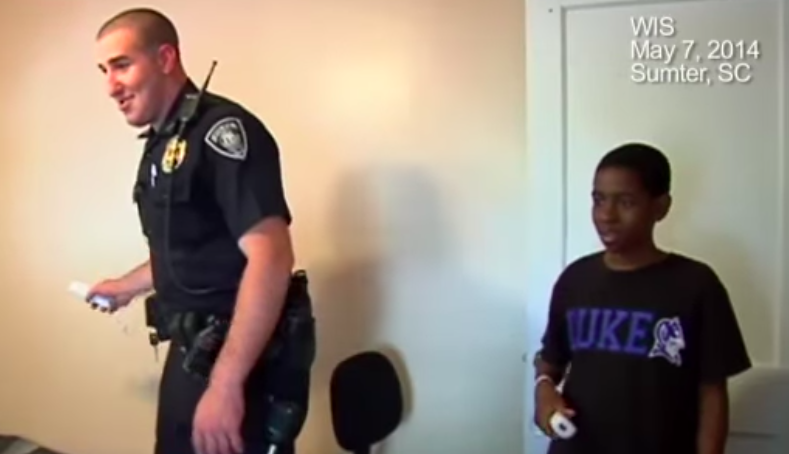
For the boy, that night marked a turning point. He no longer had to dread bedtime. He had a bed to rest in, a desk to learn at, and a space that felt like his own. More than that, he had proof that someone cared enough to see him, to listen, and to act.
Stories like these remind us that heroism isn’t always about sirens or arrests. Sometimes it’s about kindness offered quietly, without expectation. It’s about looking beyond the surface of a 911 call and recognizing the deeper cry for help.
Officer Acerra didn’t just deliver furniture. He delivered hope. And for one boy on one night, that made all the difference.
If you are parenting a child with complex medical needs, I want you to hear this: you are not alone.
This life—it is unlike anything most people can imagine. The appointments, the hospital stays, the endless coordination, the constant worry—it’s a lot. You are doing the work of an entire care team, often without pause, while the world outside your door keeps spinning as if nothing has changed. Meanwhile, your world has been rewritten, every day marked by vigilance, precision, and quiet fear.
You live on high alert. Every sound from a monitor, every subtle change in breathing, every late-night medication reminder keeps your mind active when your body desperately needs rest. Sleep doesn’t come easily when your child’s safety is literally in your hands. And yet you rise, hour after hour, day after day, to do the work no one else can.
Beneath this immense strength, there is often quiet grief. Not for your child—but for the life you imagined having. The life with fewer hospital visits, more carefree moments, ordinary milestones that other families take for granted. It’s okay to miss that life. It’s okay to grieve what was lost, even as you cherish every moment with your child. It’s okay to feel gratitude and sadness at the same time. You can love your child with every fiber of your being and still wish things were different.
There is also the loneliness. Friends may drift away. Plans are canceled. Invitations decline. And while the world outside moves forward, you may feel like no one truly understands the landscape of your days. You are not imagining this. This life is isolating. Yet, somewhere out there, another parent is awake at 3 a.m., administering tube feeds or measuring medications, feeling the same ache in their heart and the same fierce, unyielding love. You are not alone.
And about that love—it is extraordinary. It is a love that defies exhaustion, fear, and heartbreak. It is the kind of love that researches tirelessly, advocates fiercely, and fights without pause. It is the love that keeps your child’s world turning when circumstances try to stop it. That love is the engine of every small victory: a medication administered on time, a milestone reached, a smile returned after pain, a little independence gained. Every action you take is powered by it.
If you are tired, if you are grieving, if you feel like you are hanging on by a thread, know this: that does not make you weak. It makes you human. And the way you show up for your child, in ways that most could never imagine, is nothing short of heroic. The compassion, patience, and dedication you bring into every hour, every moment, every breath of your child’s life—quiet, steady, relentless—is changing the world for them, every single day.
You are seen. You are acknowledged. Your work matters. Even when it feels invisible, it is profoundly impactful. The love you pour into your child’s life is shaping not only their present, but their future. It is laying the foundation for independence, resilience, and hope that will last a lifetime.
No parent chooses this life, and no parent should face it alone. Support exists in small acts—other parents who understand, communities who care, moments of shared advice, or simply a listening ear. Lean on them. Accept help when it is offered. And remember to breathe, even if only for a moment, in the midst of the whirlwind.
You are extraordinary. The strength you show is unmatched, the sacrifices you make unseen, the courage you summon daily unparalleled. And yet, your humanity remains intact—your fear, your tears, your exhaustion are not flaws, but proof of your capacity to love fiercely, without reserve.
So today, know this: you are seen. You are not alone. And your love—quiet, steady, and relentless—is transforming the world for your child, one day at a time.
Every appointment attended, every dose administered, every sleepless night, every tear and every hug—it matters. Every effort you make matters. Every ounce of your heart, every beat of your courage, is building a life for your child that they could never achieve without you.
And if you are struggling, if you feel the weight pressing down too hard, pause. Look around. Look for the community, the support, the other parents who understand. Because together, even in moments of fear and exhaustion, we are never truly alone.
Your work is immeasurable. Your love is boundless. And your presence, day in and day out, is creating a world for your child that is brighter, safer, and filled with possibility.
You are not just parenting—you are moving mountains. And every step, every effort, every act of courage changes the trajectory of your child’s life. Never forget it.
