

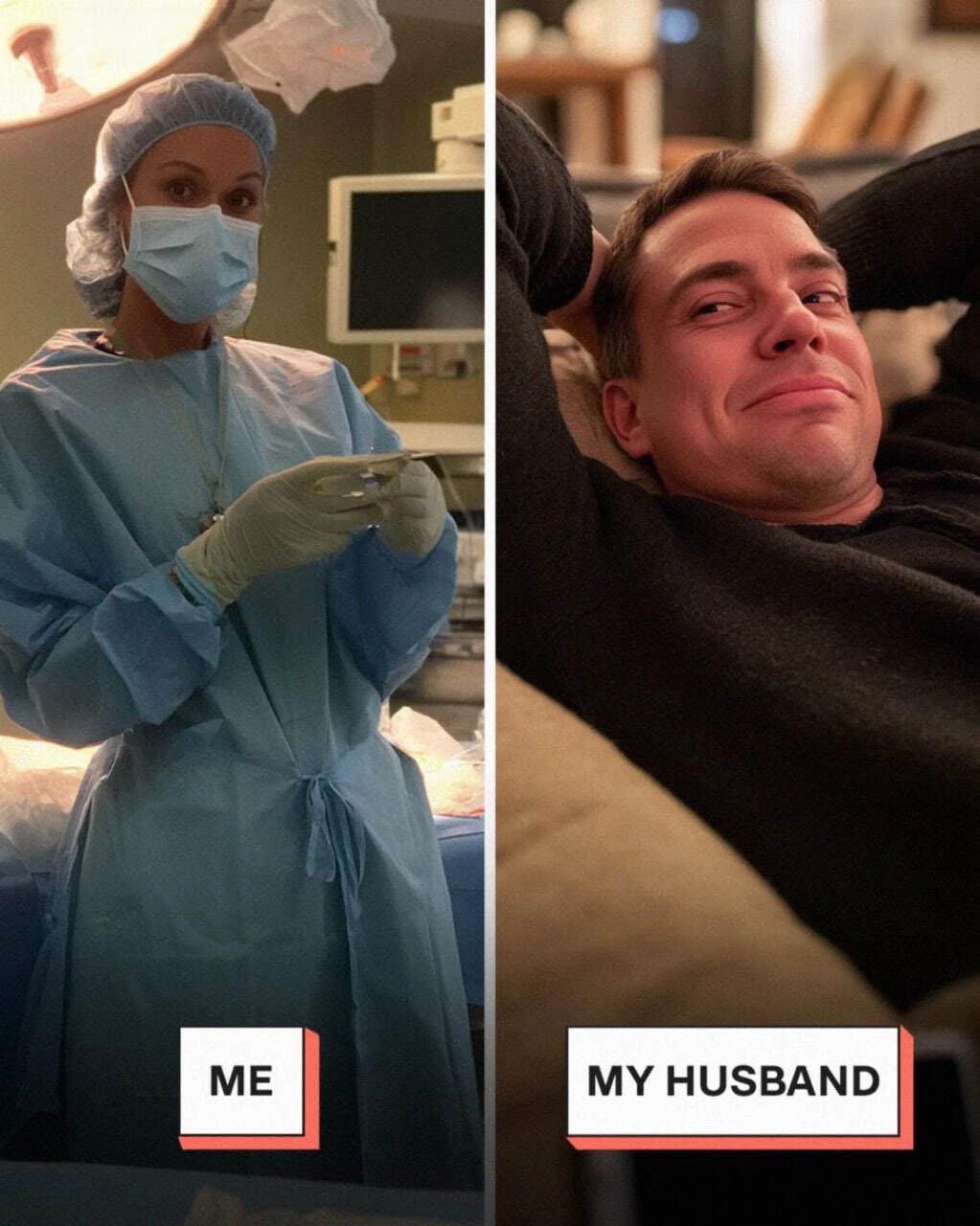
There are defining moments in life when you realize the person sleeping beside you every night doesn’t actually know who you are. For me, that moment came on a Tuesday afternoon in a hospital parking garage, holding a phone that had just changed everything.
My name is Teresa, and at thirty-four years old, I finally understood something I should have seen years earlier: my husband’s fear of my success was far greater than my fear of failure had ever been.
Medicine wasn’t just what I did for a living. It was the foundation of everything I’d built, the identity I’d fought for, the dream I’d refused to compromise on even when the cost seemed unbearable.
I had spent more than twelve years earning my place in a profession that demanded everything from me—my time, my health, my social life, sometimes even my sense of self. But it had never asked for my permission to succeed. And I’d never been willing to give anyone else that power either.
Medical school had been brutal in ways I couldn’t have anticipated. I survived on black coffee and sheer stubbornness, studying until my vision blurred and my hands cramped from taking notes. There were nights I fell asleep at my desk and woke up with textbook pages pressed into my cheek, already late for morning rounds.
Residency was even worse. Fourteen-hour shifts that somehow stretched to sixteen or eighteen. Patients who needed more than I had to give. Supervisors who expected perfection while providing minimal support. I learned to function on four hours of sleep, to make life-or-death decisions while exhausted, to present confidence I didn’t always feel.
But the hardest lessons weren’t medical. They were about navigating a system that wasn’t designed for women like me.
I learned to stand quietly in meetings while male colleagues spoke over me as if I weren’t in the room. I learned when to push back against condescension and when to document everything carefully for later. I learned which battles were worth fighting and which insults I had to swallow because challenging them would cost me more than my pride.
I told myself it was temporary. I told myself it would pay off eventually. I told myself that if I just worked hard enough, proved myself thoroughly enough, earned enough respect through sheer competence, the obstacles would finally disappear.
And for the most part, I was right. Slowly, painfully, I built a reputation as someone who showed up, who delivered results, who could be trusted with the difficult cases and complex decisions.
But there was one obstacle I hadn’t anticipated, one person whose resistance I’d underestimated: my husband Norman.
Norman and I had been married for six years. We’d met during my residency, introduced by mutual friends at a barbecue I’d almost skipped because I was too exhausted to socialize. He’d seemed kind and stable—qualities that felt incredibly appealing when my life was chaotic and unpredictable.
He worked for his parents’ logistics company, handling shipping coordination and customer accounts. It was steady work, comfortable and secure. He made about forty thousand dollars a year and seemed content with that income, with that level of responsibility.
In the beginning, I thought he admired my ambition. He would ask about my day at the hospital, seemed interested in my cases, told his friends with apparent pride that his girlfriend was going to be a doctor.
But somewhere along the way, that pride had curdled into something else. Something quieter and more insidious.
Norman liked the version of me that was accomplished but contained. Successful but not threatening. Tired enough to need him, grateful enough not to challenge him.
When I talked about my career goals—about wanting to move into leadership roles, about dreams of running a department or shaping hospital policy—he would nod distractedly, his eyes glazing over as if I were speaking a foreign language.
“That’s nice, honey,” he’d say, already reaching for the TV remote.
I told myself he was just tired after work. That he supported me in his own way. That not everyone needed to share my level of passion about medicine.
But deep down, I think I knew. I just didn’t want to see it clearly.
The offer that changed everything came on a Tuesday afternoon that had started like any other exhausting day.
I’d worked a fourteen-hour shift in the emergency department, dealing with everything from routine injuries to a cardiac arrest that we’d barely managed to stabilize. By the time I finally made it to my car in the hospital parking garage, my shoulders ached, my feet throbbed, and my brain felt wrapped in fog.
I was sitting in my car, forehead resting against the steering wheel, trying to summon the energy to drive home, when my phone rang.
I almost sent it to voicemail. I was too tired for conversation, too depleted for anything that required thinking.
But something made me answer. Instinct, maybe. Or fate.
“Teresa?” a woman’s voice asked.
“Yes,” I said, sitting up straighter despite my exhaustion.
“This is Linda Morrison. I’m calling from Riverside Medical Clinic.”
My heart jumped. I knew that clinic—a prestigious private practice with an excellent reputation, the kind of place where doctors actually had reasonable hours and institutional support.
“We would like to formally offer you the position of Medical Director,” Linda said.
The concrete walls of the parking garage seemed to shimmy and fade around me. Medical Director. The words echoed in my head like a bell.
She kept talking, her voice warm and professional, explaining the scope of the role. I would oversee all clinical operations, manage a team of physicians and nurses, shape protocols and standards of care, have real authority to make meaningful changes.
And then she mentioned the compensation.
“The salary would be seven hundred and sixty thousand dollars annually, with full benefits and flexible scheduling that actually respects work-life balance.”
I laughed before I could stop myself—a sharp, disbelieving sound that echoed off the parking garage walls.
“I’m sorry,” I said quickly, pressing my hand over my mouth. “I just… I need a moment.”
“Of course,” Linda said gently, and I could hear the smile in her voice. She’d probably heard this reaction before.
I took a deep breath, trying to process what was happening. Seven hundred and sixty thousand dollars. More than eighteen times what Norman made. More than I’d ever imagined earning. And not just the money—the authority, the respect, the opportunity to lead rather than just execute.
“I accept,” I said, my voice shaking. “I absolutely accept.”
“Wonderful,” Linda replied. “I’ll send you the formal offer documents via email this afternoon. Look them over, and if everything looks good, we can finalize the paperwork this week.”
When the call ended, I stayed in my car, forehead pressed against the steering wheel again, but this time whispering “I did it” over and over until the words felt real.
Twelve years of sacrifice. Twelve years of proving myself. Twelve years of pushing through exhaustion and doubt and discrimination.
And it had finally paid off.
I didn’t call Norman right away to tell him the news. At the time, I told myself I wanted to savor the moment privately, to enjoy the victory before sharing it.
Looking back now, I think some part of me already knew how he would react. Some part of me was already bracing for the confrontation I didn’t want to face.
Because as it turned out, Norman would become the biggest obstacle standing between me and the dream I’d worked my entire adult life to achieve.
That evening, I waited until we were both home and seated at the dinner table with no television or phones to distract us. I wanted him to hear me clearly, to really listen.
“Something amazing happened today,” I began, unable to keep the excitement completely out of my voice. “Riverside Medical Clinic called. They offered me a senior position—Medical Director. I would be running the entire clinical operation.”
Norman’s fork stopped halfway to his mouth. He set it down slowly, his expression unreadable.
“You turned it down, right?” he asked.
The question caught me completely off guard. I laughed, soft and surprised. “Why on earth would I do that?”
His expression hardened into something I’d never seen before—something cold and almost cruel.
“Because that’s not a woman’s job,” he said flatly. “And you won’t be able to handle it anyway. You’re so stupid, you know that?”
The word hit me like a physical blow. Stupid. He’d called me stupid.
My husband, who had witnessed twelve years of my education and training, who had watched me handle life-and-death situations with competence and grace, who supposedly loved and respected me—had just called me stupid for accepting the opportunity of a lifetime.
“What did you just say to me?” I asked, my voice dangerously quiet.
“You heard me,” Norman snapped, his face flushing red. “You think wearing a white coat makes you special? You think you’re better than everyone else because you have a medical degree?”
I’d dealt with condescension from male colleagues for years. I’d learned to handle it professionally, to document it, to push back strategically. But hearing those words from my own husband, in our own home, was different. It cut deeper than anything a stranger had ever said.
Something hardened inside me.
“I accepted the position,” I said, keeping my voice steady even though my chest felt tight and my hands were trembling. “I’ve worked incredibly hard for this opportunity. They’re sending me the final documents via email, and then I’ll sign them and make it official.”
Norman’s face turned an even deeper shade of red. He slammed his fist down on the table so hard the plates rattled and my water glass tipped over.
“Don’t you understand?” he shouted. “A woman’s main job is to stay home and serve her husband! I allowed you to work at the hospital, but don’t push it!”
Allowed.
That single word burned into my consciousness like acid.
He stood up so violently that his chair scraped loudly across the floor and nearly tipped over.
“Choose,” he said, his voice shaking with rage. “Right now. Either me or your stupid job. You can’t have both.”
I didn’t answer immediately. I just sat there, stunned into silence, staring at this man I thought I knew.
We didn’t speak for the rest of the evening. The tension in the house was suffocating.
I sat on the couch alone, staring at the wall, replaying every conversation we’d ever had about money and careers and ambition. Suddenly, interactions I’d dismissed or explained away took on new meaning.
Norman made about forty thousand dollars a year working for his parents’ logistics company. He called it family loyalty and talked about it as if it were noble.
But I was starting to see it differently now. His parents would never fire him or push him to perform better. He would never have to prove himself the way I had. He was insulated, protected, comfortable in a way I had never been.
And he resented me for it.
It had been difficult for Norman to accept that I consistently earned more than he did, even early in my career. But I’d told myself that didn’t matter, that we were partners, that money wasn’t a competition.
I’d been wrong.
Later that night, something shifted. Norman’s anger vanished as suddenly as it had appeared, replaced by an entirely different approach.
When I emerged from the bedroom where I’d been hiding, I found that he’d dimmed the lights throughout the house. He’d cooked pasta—my favorite kind—and opened a bottle of wine. There was even a small bouquet of flowers on the dining table.
“Come eat,” he said, his voice gentle now, almost tender. “I made your favorite.”
I was exhausted in every possible way—physically from the long shift, emotionally from the confrontation. Part of me wanted to believe this was an apology, that he’d come to his senses.
“So,” he said casually as we ate. “Have you changed your mind about the job?”
My stomach dropped. This wasn’t an apology. This was manipulation.
“No,” I said firmly. “I haven’t changed my mind.”
Norman didn’t say anything. He just gave me this strange little smile—small and secretive, almost smug.
I should have recognized it as a warning. But I was too tired, too overwhelmed, too desperate for the day to be over.
After dinner, my body simply gave out. I collapsed onto the bed still fully clothed, asleep before my head hit the pillow.
Norman stayed up later, or at least that’s what he claimed afterward. He said he was just scrolling on his phone, catching up on news, the usual nighttime routine.
I believed him.
That was my mistake.
The next morning, I woke up with nervous excitement buzzing through my entire body. Today was the day I would review the final offer documents, sign them, and officially accept the position that would transform my career and my life.
I grabbed my phone from the nightstand and opened my email.
What I saw made the room spin.
A message had been sent from my account at one o’clock in the morning—hours after I’d fallen asleep.
The subject line read: “RE: Medical Director Position.”
With shaking hands, I opened it.
“I’M TURNING DOWN THE OFFER. I’m not interested in working with you. Don’t ever contact me again, you fucking idiots!”
My hands started trembling so violently I nearly dropped the phone.
“No,” I whispered to the empty room. “No, no, no. I didn’t write this.”
But there was only one person who knew my phone password. Only one person who had access to my email. Only one person who had been awake when I fell asleep.
Norman.
My husband had sabotaged my dream job while I slept.
And he was about to learn that I don’t forgive. I get even…
The Calculated Revenge I Served Cold at the Dinner Table
I stood in the kitchen doorway, watching Norman read the newspaper and whistle cheerfully, looking more relaxed and pleased with himself than I’d seen him in months.
There was absolutely no sign of last night’s rage. No trace of the man who had slammed his fist on the table and called me stupid. He looked as happy as someone who’d just won the lottery.
“Morning,” he said without looking up from the sports section.
Every muscle in my body tensed. I wanted to scream. I wanted to throw his coffee cup against the wall. I wanted to confront him right there about what he’d done, demand answers, make him admit to the sabotage.
But I didn’t.
Instead, I took a breath and smiled. “Good morning, honey,” I said sweetly.
Because in that moment, standing there looking at my husband’s smug, satisfied face, I made a decision. Confronting him now would be emotional and chaotic. I would lose control of the situation, and he would find a way to twist it, to make me seem irrational or ungrateful.
Doing nothing would cost me my future. So I decided to do something much smarter.
I would teach Norman a lesson he would never, ever forget.
“I’m running late,” I said, grabbing my keys. “Have a good day at work.”
As soon as I got to the hospital, I took my lunch break sitting in my car with the doors locked, heart pounding, hands shaking as I dialed the clinic’s number.
When Linda Morrison answered, I had to force myself to sound calm and professional instead of panicked and furious.
“Linda, this is Teresa Hayes,” I said. “I need to speak with you about the email you received from my account last night.”
There was a pause. “Yes. We were… surprised by the tone. It seemed very out of character.”
“That’s because I didn’t send it,” I said, the words tumbling out faster now. “My phone was hacked. Someone accessed my email and sent that message without my knowledge or permission. I would never communicate that way, and I absolutely did not decline the position.”
Another pause, longer this time. I could hear the hesitation, the doubt.
“Teresa, this is… unusual. How do we know—”
“I understand your concern,” I interrupted, forcing my voice to stay steady even though tears were threatening. “I can provide documentation about the security breach. I can come to your office today to discuss this in person. I can provide references who will vouch for my character. But please believe me—I want this position more than anything, and I would never jeopardize it with an email like that.”
The conversation lasted twenty agonizing minutes. By the time it ended, my throat hurt from holding back tears and my hands were cramped from gripping the phone too hard.
“We’ll need to discuss this internally,” Linda finally said. “But I appreciate you reaching out to explain. We’ll be in touch.”
It wasn’t a yes. But it wasn’t a final no either.
I sat in my car afterward, forehead pressed against the steering wheel, trying not to fall apart completely. The humiliation of that phone call—having to explain, having to beg, having to defend myself against sabotage from my own husband—was almost unbearable.
But I couldn’t fall apart yet. I had a plan to execute.
Before leaving for work that morning, I’d asked Norman something that probably seemed innocent and even conciliatory.
“I think we should invite your parents for dinner tonight,” I’d said while rinsing breakfast dishes. “I want to explain about the job situation together. They deserve to hear it from us, not through rumors or half-stories.”
Norman had looked almost amused. “Fine,” he’d said. “Maybe they’ll finally see that you were reaching too high anyway.”
The comment had made my blood boil, but I’d smiled and nodded as if I agreed.
All day at work, even as I went through the motions of patient care and chart documentation, my mind was on that dinner. I planned every detail, rehearsed every line, anticipated every possible response.
I replayed conversations in my head, practiced tones of voice, reminded myself over and over of one critical truth: If I did nothing, this pattern would never end. Norman would continue undermining me, sabotaging my career, controlling my choices through manipulation and threats.
I couldn’t afford to be afraid anymore.
When I got home that evening, I acted completely calm. I changed into comfortable clothes, started preparing dinner, smiled when Norman came into the kitchen.
“What are you making?” he asked.
“Your mother’s favorite chicken dish,” I said. “I want tonight to be nice.”
He looked satisfied, as if my compliance confirmed his worldview.
My in-laws, Richard and Elaine, arrived exactly on time, as they always did. Elaine hugged me tightly when she came through the door, her familiar perfume and warm embrace almost making me lose my composure.
“You look tired, sweetheart,” she said softly, studying my face with concern. “Are you all right?”
“I will be,” I said, meaning it more than she could possibly understand.
What you need to understand about my relationship with Norman’s parents is that they absolutely adore me. From the moment Norman brought me home to meet them during my residency, they’d welcomed me with genuine warmth and enthusiasm.
Richard, Norman’s father, had grown up working class and built his logistics company from nothing through hard work and smart decisions. He respected ambition and education in a way his son never had.
Elaine had been a high school teacher before retiring, and she’d always encouraged my career, always wanted me to achieve everything I was capable of.
They were good people. Kind people. People who deserved to know the truth about their son.
Dinner started with polite small talk. The weather, Richard’s golf game, Elaine’s book club, Norman’s complaints about a shipping delay at work as if it were the greatest injustice ever inflicted on mankind.
Halfway through the meal, I set down my fork and took a breath.
“I wanted to tell you both something in person,” I said, keeping my voice calm and measured. “I was recently offered a senior position at Riverside Medical Clinic. Medical Director, overseeing all clinical operations.”
Elaine’s face lit up immediately. “Teresa, that’s wonderful! That’s exactly the kind of opportunity you deserve!”
Norman cleared his throat loudly, a warning sound.
“Unfortunately, the offer fell through,” I continued, lowering my gaze as if disappointed. “It didn’t work out.”
Elaine’s smile faded. “Oh no. What happened?”
“I’m not entirely sure,” I said carefully. “Maybe it just wasn’t meant to be. Norman didn’t think it was a good fit anyway.”
Norman shot me a warning look across the table, his eyes hard.
“That’s not exactly what I said,” he muttered.
I tilted my head slightly, as if confused. “You said you didn’t think it was right for me. That I wouldn’t be able to handle it.”
Richard leaned back in his chair, his expression thoughtful. “What kind of responsibilities would the position have involved?”
Norman answered before I could, speaking too quickly. “They wanted her to oversee staffing decisions and manage the budget too, which she’s never done before. It was too much responsibility.”
Richard blinked, looking at his son with interest. “How did you know those specific details?”
The room went very quiet.
I kept my voice gentle, almost puzzled. “That’s strange, honey. I never told you those details about the job.”
Norman stiffened in his chair. “You must have mentioned it.”
“I didn’t,” I said, still using that same calm, slightly confused tone. “The only place those specific responsibilities were described was in the email correspondence between me and the clinic. In fact,” I continued, “the offer didn’t really fall through on its own. Someone sent a message from my phone in the early hours of this morning, declining the position as if I had written it. But I didn’t.”
You could have heard a pin drop.
Elaine and Richard both turned to look at Norman, their expressions shifting from confusion to dawning realization.
“You sent that message?” Richard asked, his voice dangerously quiet.
Norman stammered, his face going red. “She’s confused. She misunderstood the situation.”
I pulled out my phone with steady hands and placed it on the table in front of everyone. “Someone used my account to reject the offer with extremely inappropriate language. I didn’t write it. I was asleep.”
I pulled up the sent message and turned the screen so Richard and Elaine could read it.
Elaine covered her mouth, her eyes wide with shock. Richard’s face turned red, but with anger rather than embarrassment.
“Norman,” Richard said, his voice like steel. “Did you access your wife’s email and send that message?”
“I was protecting her!” Norman burst out. “She doesn’t understand what she’s getting into. That job would have destroyed her. I did what was necessary—”
“What was necessary?” Richard’s voice rose. “You sabotaged your wife’s career! You went behind her back like a coward instead of having an honest conversation!”
Elaine’s hands were shaking. “Norman, how could you do something like this? Teresa has worked so hard. She deserves every opportunity that comes her way.”
And then they really laid into him.
I sat quietly, eating my dinner, while Richard and Elaine tore into their son with a ferocity I’d never witnessed before. They weren’t just disappointed—they were furious, disgusted even.
Richard told Norman he was a disgrace to the family. Elaine said she was ashamed to call him her son. They brought up every time Norman had underperformed at work, every instance of him taking the easy road, every moment he’d demonstrated the exact opposite of the work ethic they’d tried to instill.
Norman shrank under their verbal assault, his face getting redder, his posture getting smaller. I knew he feared his father’s judgment more than almost anything, and watching him crumble under that disappointment was grimly satisfying.
When Richard and Elaine finally left—after apologizing to me profusely, hugging me, telling me they supported whatever I decided to do—the house felt different. Smaller. Colder.
Norman’s first reaction, after they were gone, was to laugh. It was a sharp, ugly sound that echoed in the quiet house.
“You think you won?” he said, his eyes hard and mean. “You still don’t have your fancy job. You humiliated me in front of my parents for nothing.”
That’s when I told him the truth.
“Actually,” I said, my voice steady and calm, “I called the clinic this morning, long before dinner. I explained everything to them—about my phone being accessed without permission, about the message being sent while I was asleep. They were understandably concerned, but I provided character references and documentation. They reinstated the offer. I accepted it formally and signed all the paperwork this afternoon.”
Norman’s smug expression collapsed like a house of cards.
“You’re lying,” he said, but his voice wavered.
“I’m not,” I replied. “I start in two weeks. And I’ve already contacted a divorce attorney. The papers will be filed tomorrow.”
He stared at me as if he’d never seen me before, as if I’d suddenly become a stranger.
Then his phone buzzed.
He pulled it out, glanced at the screen, and went completely pale.
“They fired me,” he whispered, looking at the phone as if it had bitten him.
I was genuinely surprised by that. I hadn’t anticipated it.
“What?” I asked.
“My parents,” he said, his voice hollow. “They fired me from the company. They said…” He looked up at me, his eyes wide with shock. “They said I was a liability. That I’d demonstrated poor judgment and worse character. That I was costing the company money through incompetence but they’d tolerated it because I was family. But after tonight…”
He trailed off, still staring at his phone.
I nodded slowly. “Your parents didn’t appreciate what you tried to do to me. They’re good people who respect hard work and integrity. You disappointed them.”
Norman sank into a chair, his phone clutched in his trembling hands. “You ruined me,” he said quietly.
I shook my head. “No, Norman. You did that yourself…”
Norman sat slumped in the chair, staring at his phone as if it might suddenly change the message his parents had sent. As if reality might rearrange itself into something he could tolerate.
“This is your fault,” he said finally, his voice flat. “If you’d just stayed in your place, none of this would have happened.”
I felt something inside me go very still and very cold.
“My place,” I repeated quietly. “You mean poor and small and afraid of your disapproval?”
He looked up at me, and for the first time, I saw genuine confusion on his face. As if he couldn’t understand why I wasn’t devastated alongside him, why I wasn’t apologizing for the consequences of his own actions.
“I was trying to protect you,” he said. “That job was too much for you. You would have failed, and then where would we be?”
“We?” I laughed, a harsh sound. “There is no ‘we,’ Norman. There hasn’t been for a long time. I just didn’t see it clearly until now.”
I walked to the bedroom and pulled out the suitcase I’d already packed earlier that day, while he’d been at work thinking everything was going according to his plan.
Norman followed me, watching as I gathered the last few items. “Where are you going?”
“Somewhere you’re not,” I said simply.
“You can’t just leave,” he said, and there was panic in his voice now. “We’re married. You made vows.”
I stopped and turned to face him fully. “You broke those vows the moment you decided you had the right to control my life, sabotage my career, and make decisions about my future without my input. I’m not leaving our marriage, Norman. You destroyed it. I’m just acknowledging reality.”
He grabbed my arm, not hard but firm enough to stop me. “Please. We can work through this. I’ll apologize to the clinic. I’ll explain—”
“Explain what?” I pulled my arm away. “That you think women should stay home and serve their husbands? That you deliberately sabotaged your wife’s career opportunity out of insecurity and spite? That you’re only sorry now because there are consequences?”
He didn’t have an answer for that.
I picked up my suitcase and headed for the door. Norman followed me, still talking, still making excuses, still somehow believing that the right combination of words would make me stay.
At the door, I turned back one last time.
“I hope someday you understand what you lost,” I said. “Not just me. But the chance to be proud of your wife instead of threatened by her. The opportunity to build something together instead of tearing it down out of fear. That’s what you threw away.”
I left that night with my suitcase, my dignity, and my future intact.
I stayed with a colleague from the hospital for the first week, then found a small apartment closer to the clinic where I’d be starting my new position. It was temporary housing, just a place to sleep and regroup while I figured out my next steps.
The divorce proceedings moved quickly once they started. Norman tried to contest it at first, claiming I was being irrational and emotional. But when his own parents sided with me, even supporting my decision publicly, he eventually signed the papers.
I learned later that Richard and Elaine had been horrified by what their son had done. They’d spent years encouraging my career, celebrating my accomplishments, treating me like the daughter they’d never had. Norman’s sabotage wasn’t just a betrayal of me—it was a betrayal of the values they’d tried to instill in him.
Richard personally called me to apologize for his son’s behavior and to assure me that firing Norman had been the right decision.
“He’d been underperforming for years,” Richard admitted. “We kept him on because he was family, kept hoping he’d mature and step up. But what he did to you… that showed us who he really is. Someone who tears down others when he feels threatened instead of working to better himself.”
The conversation made me cry—not from sadness, but from the strange relief of being seen and supported by people who mattered.
Starting at Riverside Medical Clinic was both exhilarating and terrifying.
The first day, I walked into the gleaming modern building, met my administrative assistant, toured the facilities that were now mine to oversee, and felt the weight of responsibility settle onto my shoulders.
This was what I’d worked for. This was what I’d fought for, sacrificed for, refused to compromise on.
And Norman had tried to take it away while I slept.
But he’d failed. And I’d won.
The staff was professional and welcoming, though I could sense some were testing me, wondering if I really had the competence to run clinical operations or if I’d been hired to check some diversity box.
I didn’t blame them for the skepticism. I’d faced it my entire career. I just had to prove myself again, the way I always had.
Within three months, I’d restructured scheduling to reduce physician burnout, implemented new patient safety protocols that caught three potentially serious errors, and improved staff satisfaction scores by twenty percent.
The board of directors sent me a personal note of commendation. My team started trusting my leadership. The skepticism faded as results spoke louder than doubt.
I was good at this job. Better than good. I was exactly where I was supposed to be.
About six months after I’d left, Norman started trying to contact me.
First it was texts. Short messages claiming he understood now, that he’d been wrong, that he wanted to talk.
I didn’t respond.
Then came emails. Longer, more detailed, explaining how therapy had helped him see his mistakes, how he wanted a chance to make amends.
I deleted them without reading past the first paragraph.
Finally, he tried sending letters to my new address—though I never figured out how he got it. The letters talked about forgiveness, about second chances, about how much he’d changed.
I returned them unopened.
My lawyer advised me that I wasn’t obligated to respond to any contact from my ex-husband. So I didn’t.
Some of my friends thought I was being too harsh, that everyone deserves forgiveness and second chances.
But they didn’t understand that forgiveness and trust are not the same thing.
I could forgive Norman for being threatened by my success. I could even understand the insecurity that drove him to sabotage my career.
But I could never trust him again. And without trust, there was no relationship to salvage.
About a year after the divorce was finalized, I was having coffee with Elaine—Norman’s mother, who had remained close to me despite everything.
She told me that Norman had moved to another state, taken a job with a small shipping company making barely above minimum wage, and was apparently “working on himself.”
“He asks about you sometimes,” Elaine said carefully. “Wants to know if you’re happy.”
“And what do you tell him?” I asked.
“The truth,” she said. “That you’re thriving. That you’re exactly where you should be. And that his inability to celebrate that says everything about him and nothing about you.”
I smiled at her across the coffee shop table. “Thank you for that.”
“Teresa,” she said, reaching across to squeeze my hand, “you were always too good for my son. I’m just sorry it took something this dramatic for you to see it.”
Two years after leaving Norman, I attended a medical conference where I was presenting on the patient safety protocols I’d developed at Riverside.
After my presentation, a woman approached me—late thirties, confident, wearing an expensive suit.
“That was brilliant,” she said. “I’m Rachel Chen, CEO of Sterling Health Systems. We’re building a new network of clinics across the region and looking for someone to serve as Chief Medical Officer. Would you be interested in discussing the position?”
Chief Medical Officer. Overseeing not just one clinic, but an entire network. Shaping healthcare policy at a regional level. Salary approaching a million dollars annually.
The old me might have hesitated, might have wondered if I was qualified, might have sought permission from someone.
The new me smiled and said, “I’d love to hear more.”
Three months later, I accepted the position.
I thought about Norman when I signed the contract. About how he’d tried to keep me small and safe and contained. About how he’d genuinely believed that sabotaging my career was “protecting” me.
About how spectacularly wrong he’d been.
I wondered sometimes if he ever realized what he’d lost. Not just me as a wife, but the opportunity to be part of something extraordinary. The chance to support and celebrate someone achieving remarkable things instead of feeling threatened by their success.
That was the real tragedy of our marriage—not that it ended, but that it had been built on such a fundamentally broken foundation.
Norman had needed me to stay smaller than him. And I had needed to become exactly who I was always meant to be.
Those two needs were incompatible.
Last month, I received an unexpected piece of mail—a wedding invitation.
Norman was getting remarried, apparently. To a woman named Jennifer who, according to the brief bio included with the invitation, was a part-time administrative assistant who “loves cooking and homemaking.”
I almost laughed at the transparency of it.
Norman had found exactly what he wanted—someone who would stay in the place he needed her to stay, who wouldn’t threaten him with ambition or success or independence.
I hoped Jennifer was happy. I hoped Norman had actually changed, had actually learned something from our disaster of a marriage.
But I doubted it.
People don’t usually change their fundamental beliefs about power and control just because they experience consequences. They just find new ways to express the same patterns.
I didn’t RSVP to the wedding. I didn’t send a gift. I simply threw the invitation away and went back to my life.
Because that’s what it was now—my life, fully and completely my own.
Looking back on everything that happened, I realized that Norman hadn’t just lost control of me when I left. He’d lost control of the carefully constructed version of himself he’d been hiding behind.
The successful businessman working for his family company. The supportive husband who “allowed” his wife to have a career. The good son who would eventually take over the logistics business.
All of that had been a facade. And when I’d pulled back the curtain during that dinner with his parents, when I’d exposed the sabotage and manipulation, the facade had crumbled completely.
What remained was just Norman—insecure, controlling, threatened by anyone’s success but his own.
And he’d have to learn to live with that truth, the same way I’d learned to live with mine.
My truth was simpler and far more liberating:
I didn’t need permission to be successful. I didn’t need to make myself smaller to make someone else comfortable. I didn’t need to sacrifice my dreams to preserve a marriage that was built on inequality and control.
I just needed to be brave enough to choose myself.
And once I made that choice, everything else fell into place.
Today, I run clinical operations for seventeen clinics across three states. I mentor young women physicians who are navigating the same challenges I once faced. I speak at conferences about leadership and patient safety and building healthcare systems that actually serve people well.
I make more money than I ever imagined. I have authority and respect and the opportunity to make meaningful change in how medicine is practiced.
And I did it all without permission from anyone.
Sometimes people ask me if I regret how things ended with Norman. If I wish I’d tried harder to save the marriage, to make him understand, to find a compromise.
The answer is simple: No.
Because the moment Norman gave me that ultimatum—choose between him and my career—he’d already made the choice for both of us.
He’d chosen his ego over our partnership.
He’d chosen control over collaboration.
He’d chosen his own insecurity over my potential.
I just chose differently.
I chose myself. I chose my career. I chose the future I’d worked twelve years to build.
And I’ve never looked back.

